By: jenni4321
Your health diary can be a valuable repository of information related to your health and well being. Suppose you or your loved one met with an accident, or are in some kind of medical emergency. A lot of people have gathered and want to help. Some are even medically qualified. But they do not know your medical history. For example, they do not know if you have are allergic to any particular medicines, or if you have a heart disease or a particular medical condition that need special attention. If they did have all this information they would be able to avoid any medical complications, they would also be able to give you better medical attention.
Your health diary is a place where you can store such information. You can then give your username and password to those medical personnel who would need this information and in this way you can make your entire medical history and profiles accessible to those who need it. A primary contact detail, which to be reached in case of an emergency/accident is the most important of all. In this section, you can store the name address and other contact information of the person who is to be contacted and this person’s relationship with you. Similarly, you can store a secondary contact details
Then come the medical contact details where you can store the name and phone number of your physician, dentist and your pharmacy. Basic health issues should be stored
Such as eye care, dental care, your family history, your history of allergies, and immunizations already done.
Basic health information should also be there, to store information such as your date of birth, gender, height, weight, marital status, ethnicity/race, blood type, blood pressure, cholesterol levels, and even information about any medical implants such as a pacemaker, or an artificial lens implanted during your cataract surgery, or a steel rod implant that holds together a fractured bone. In addition you can store information about any dentures, dental implants, braces, orthodontia, tooth filling, teeth extracted, maxillofacial surgery, if any…and a lot of other valuable information related to your dental health.
Your ophthalmologists and optician’s contact information and all your eyewear prescriptions that spell out details of your vision in each eye can also be recorded.
A family history section can be made which will reflect the medical details of your family members. In many cases, family medical history has proved to be very useful in understanding the patient’s current medical condition and even making future predictions. Any previous family medical diseases that the family is prone to, can be recorded here.
Modern medical science has now understood the influence of lifestyle on a person’s health. A life styles section can have the details of you exercise routines, if any, your food and drink habits. Do you smoke? Consume alcohol? Are you a vegetarian or non –vegetarian, are there any particular vitamins that you take regularly? If you have allergies, store the information related to those allergies here. This way, if and when you do have an emergency then the doctors treating you will be better of knowing about these allergies and can avoid a case of you developing any allergic reactions.
A miscellaneous section should always be there. This section of your health diary shall contain information about immunization or vaccination that you have takes in your life, your health insurance and other legal documents related to your health. This information can be used to pay your insurance premiums and evaluate the same.
This is where you can store contact details of your health care providers, doctors, hospitals, and the pharmacies that you frequently visit. You can also store details of your medical and healthcare insurance policies and other such legal documents related to your health and well being. If you take your health and well beings seriously, then you will find the health diary as a useful tool.
About the Author. Jennifer is an expert Internet marketing professional with years of experience in various industries such as: Business, Real Estate, Health Record, Web-Design, Health & Medicine and many more.
Article Source: http://www.articlerich.com/Article/Health-Diary---A-Guide-To-Call-An-Ambulance/368230
10/02/2009
Health Diary – A Guide To Call An Ambulance
Labels: guide
Posted by admin at 8:46 PM 0 comments
9/27/2009
Mom's guide to better and cheaper health
by Peter Yellowlees
Mom's organize most family healthcare in this country. Women of today bear the bulk of the caring load, and tend to have responsibility for not only their own, but their husbands and their children's health. Frequently they also care for other members of extended families, their parents and grandparents, brothers and sisters, uncles and aunts, and sometimes even nieces and nephews. This is often a very time-consuming and complicated task that may lead to women giving up personal interests and opportunities, and not infrequently dropping out of the workforce, to become full time extended family carers. This leads to difficulties as women are more stretched than ever before, especially in this economic recession, where their work incomes are often essential to keep their family afloat, yet they still have to spend considerable amounts of time and energy arranging family care. The bottom line is that caring for families, and in particular extended families, is not only an increasingly time-consuming issue for today's women, but also an expensive one.
Everyone talks about how expensive healthcare is, yet few people have started to really look at how it could be cheaper for patients. Many of the costs of healthcare are the result of inefficient practices that arise from a system that has not been focused on patients, and has just assumed that patients will travel from one clinic to the next, from one lab to another, and from home to hospital. Most doctor's practices and health systems try and save money for themselves, but not for patients, and often they actually make more money by being inefficient because patients end up having more consultations and repeat tests than are really necessary, and paying for them. There are now many ways that the internet can be used to improve your health, and at the same time to save both time and money, and to therefore ultimately make healthcare cheaper for everyone. This is something that every mom needs to think about.
As a practicing physician I often advise my patients on a number of ways that they can use the Internet to improve their own healthcare, while at the same time working more closely with their usual doctor.
Broadly these approaches can be described in four simple steps. In brief they are:
1. Learn about how to use the internet for your healthcare. Read about the many different ways that the internet is now changing the practice of healthcare, from the implementation of electronic records and e-prescribing, to emailing your doctor and getting your lab results online.
2. Check out your doctor, and any other health providers, to make sure that they are appropriately expert and qualified to provide your care - and that they can do this using the internet
3. Learn to work collaboratively with your doctor using internet based healthcare. Find out which of the many internet health possibilities can be used by you and your doctor, and use them. You will save a lot of time and money by obtaining your healthcare more efficiently and easily - often at the click of a mouse.
4. Check out your current treatment, and compare it with best practices and health guidelines that you can find on the internet. Learn how to search the internet for health information and how to work out which information is helpful and accurate, and which is not. Then consult with your doctor, and discuss any areas where you think improvements can be made.
It is important that people improve their health by working collaboratively online and face to face with their doctors, by learning how to search effectively for good quality health information, and by comparing their own current treatment with best practice guidelines available on the internet. Today's mom's have more challenges than any previous generation, and often have to juggle work roles and home duties, such as arranging family healthcare. It is now time for mom's to start changing healthcare by insisting that doctors use the many different options for healthcare that the internet has opened up.
This article is based on excerpts from the recently published book "Your Health in the Information Age - how you and your doctor can use the Internet to work together" by Peter Yellowlees MD. Available at http://www.InformationAgeHealth.com
Posted by admin at 8:37 PM 0 comments
11/13/2008
How to Choose Fresh Fruit
Eating the proper amounts and the right kinds of fruits is important to healthy living. Nutritionists recommend eating a minimum of five one cup servings of each per day. To make sure you select healthy fruits and avoid that of questionable quality, here are a few basic tips in your selection.
Though seems so simple, buying fruit can be complex. That's why if you look closely at most any grocery store produce section you'll notice people squeezing, sniffing and examining their fruit very carefully.
The first rule to know is that the fresher the produce the better the quality. The best place to find the freshest and best selection of produce is at farmer's markets. Most farmers harvest their produce the day before or the day of the market. They also usually use minimal pesticides. This fact in itself provides you with better health while protecting the environment.
If you are not fortunate enough to have access to a farmer's market, just go to the grocery store and take care to pick only the healthiest produce. You need to use this grocery store produce within a few days. Try to locate a grocery store that has frequent deliveries of produce. Avoid grocery stores that have an extremely cold produce section. This makes it hard to check the texture and scent of produce. Convenience and corner stores more often than not have produce of poor quality due to the fact that it is not delivered fresh daily or it is not properly stored. Here is some of those fruits.
Bananas. Unlike most other fruits, bananas develop their best eating quality after they are harvested. This allows bananas to be transported great distances. Bananas are sensitive to cool temperatures and will be injured in temperatures below 55 F. For this reason, they should never be kept in the freezer. The ideal temperature for ripening bananas is between 60 and 70 F. Higher temperatures cause them to ripen too quickly.
Look for bananas which are firm, bright, and free from bruises or other injury. The state of ripeness is indicated by skin color. Best eating quality has been gained when the solid yellow color is specked with brown. At this time, the flesh is mellow and the flavor is fully developed. Bananas with green tips or with no yellow color have not developed their full flavor potential. Avoid bruised fruit (indicating rapid deterioration and waste); discolored skins (a sign of decay); a dull, grayish, aged appearance (showing that the bananas have been exposed to cold and will not ripen properly).
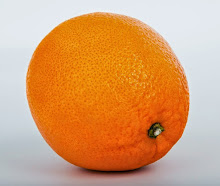
Oranges: When looking for a ripe orange, don't worry about color. Oranges with green or brown patches can be just as ripe (and some very orange oranges are even injected with food coloring to get that bright color). For the best flavor, seek for a firm, heavy orange with a thin, smooth skin.
The freshness of a bunch of grapes can be seen in the stem. If the stem is still green all the way to the grapes then their harvest was recent. A bunch with dried stems and soft, wrinkled or leaking grapes is decaying. Grapes do not ripen after harvest and should be served or freezed in an open container.
Cantaloupe: Be choosy when picking a cantaloupe because they're often picked while still unripe so they're not crushed during transportation. You can spot an unripe cantaloupe by its green tones. Instead, look for a cream-colored cantaloupe (with no green patches) that has a little soft end (the end opposite the stem). Also, give it a sniff and choose one that smells little sweet (but not overly so, which could mean it's too ripe).
Mangoes: Finding a ripe mango can be tricky because they can be yellow, red, green or orange in color. Those that are ready to eat will usually have a yellow hue and should be slightly soft to the touch. Ripe mangoes also have a sweet aroma near the stem end.
Berries should be brightly colored, plump and fragrant. To be sure the batch is good make sure the container hasn’t been stained or damp. Berries should not be handled much and only washed if necessary as that speeds mold. Berries have a very short shelf-life and should be consumed or refrigerated. They are best kept in layers on paper towels, covered by a moist paper towel or in an open paper bag. The smaller the size, the better the flavor.
Apples: A ripe apple will be firm and deeply colored. Apples should smell sweet and have strong, smooth and shiny skin. Apples can be stored in a freezer for some weeks. Depending on the variety, there should also be a slight rosy tone (such as with yellow and green apples). If you want to find apples with better flavor, buy them during apple season, which spans from late summer to early winter.
Papaya: Papayas with a red-orange skin are ripe and ready to eat. Those with yellow patches are still good, but will take a few days to ripen. Avoid papayas that are green or very hard, as they're not fully ripe and won't have a sweet flavor. May this information useful.

 Posts
Posts